10% to 25%, Making the case for $1,699
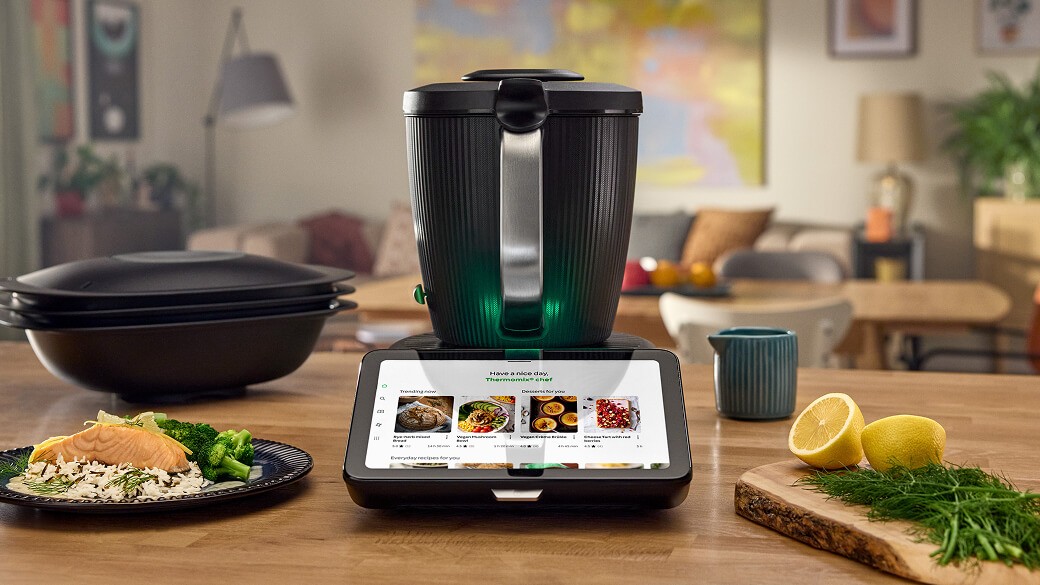
A premium kitchen appliance sold direct, to an audience that had mostly never heard of the brand.

ROLE
Product Designer, Ecommerce
TIMELINE
Four months to launch
TEAM
Marketing manager, media agency, dev team
PLATFORM
Shopify, Web
PDP CONVERSION
Conversion rate increased from 5% to 25%
The problem
People do not bounce off a $1,699 product page because the button is in the wrong place. They bounce because they are holding three questions at once.
• What does this thing actually do?
• Why does it cost that much?
• Why this instead of the appliances I already own?
A product page cannot answer all three to a cold visitor in one scroll. And most of the paid traffic was cold, because almost nobody in the US market knew the brand.
Building the argument before the page
Instead of loading everything onto the PDP, I built narrative landing pages that met people at the stage they were actually in, mapped across the funnel: a new year reset, weight loss, busy families, busy professionals, and a homemade-cooking narrative that outperformed the rest. Each one takes a single motivation and earns the price through it, rather than listing specifications at someone who has not yet decided they want the category. By the time a customer reached the PDP, two of the three questions were already answered. The page only had to close.
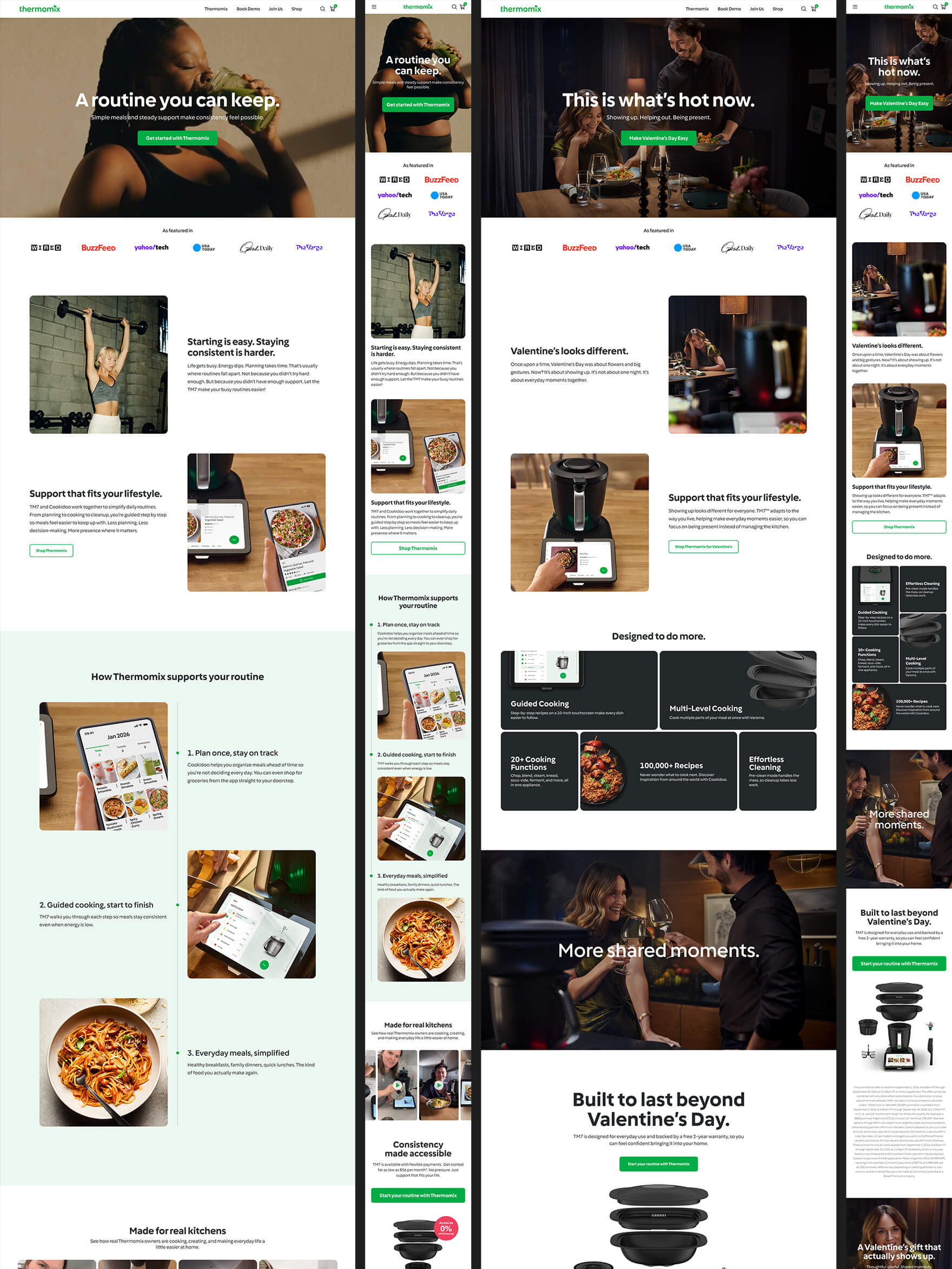
Narrative landing pages, one motivation each
Rebuilding the page
With education moved upstream, the PDP could do its actual job: convert someone who is most of the way convinced.
Real reviews and owner video
Owners demonstrating the machine in their own kitchens, instead of a default review widget and a star average.
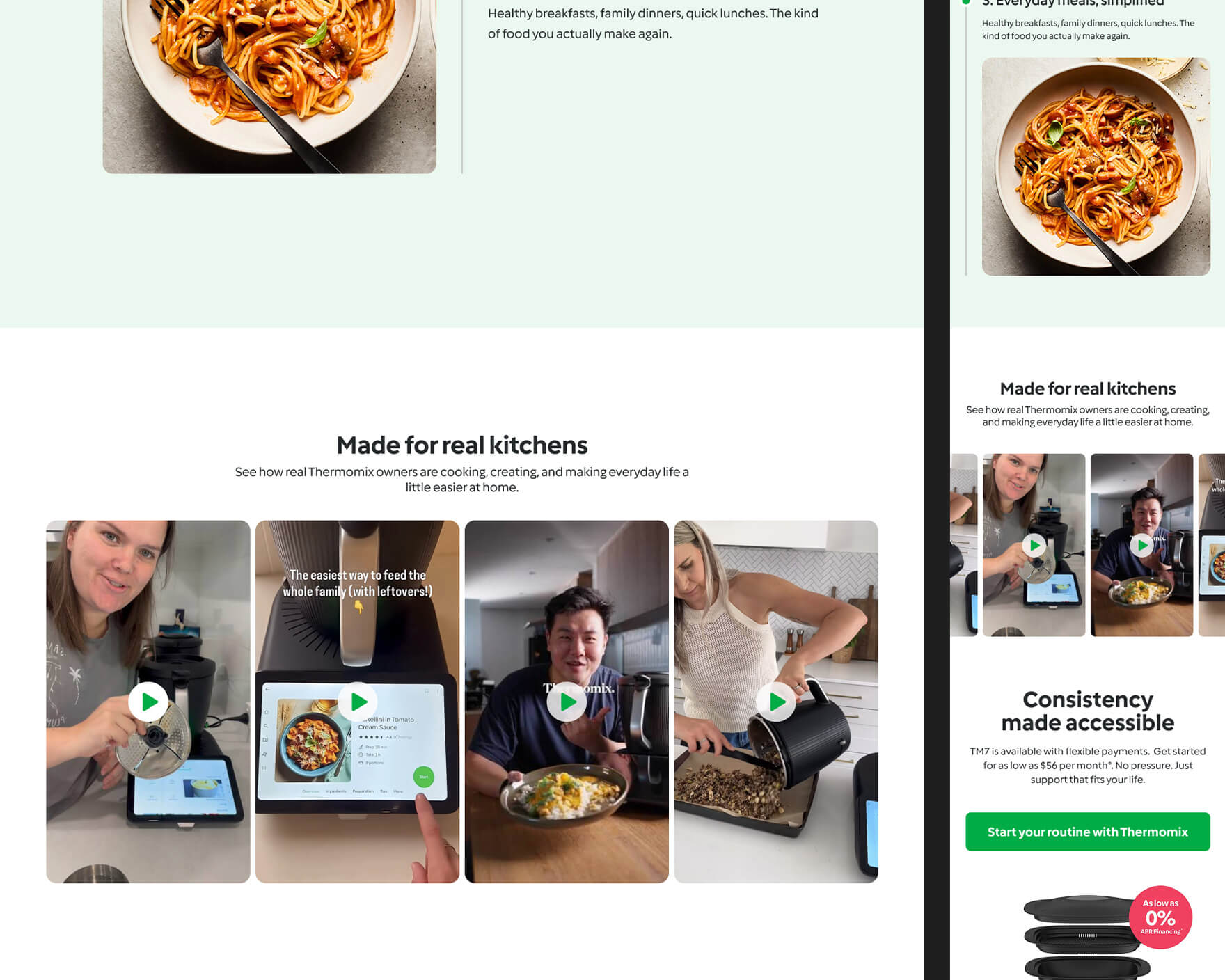
Owners demonstrating in their own kitchens
An interactive hotspot module
Showing what is in the box, letting people explore the machine’s tools and attachments rather than reading a list. For a product this size, “what am I actually getting?” is a real objection, not a detail.
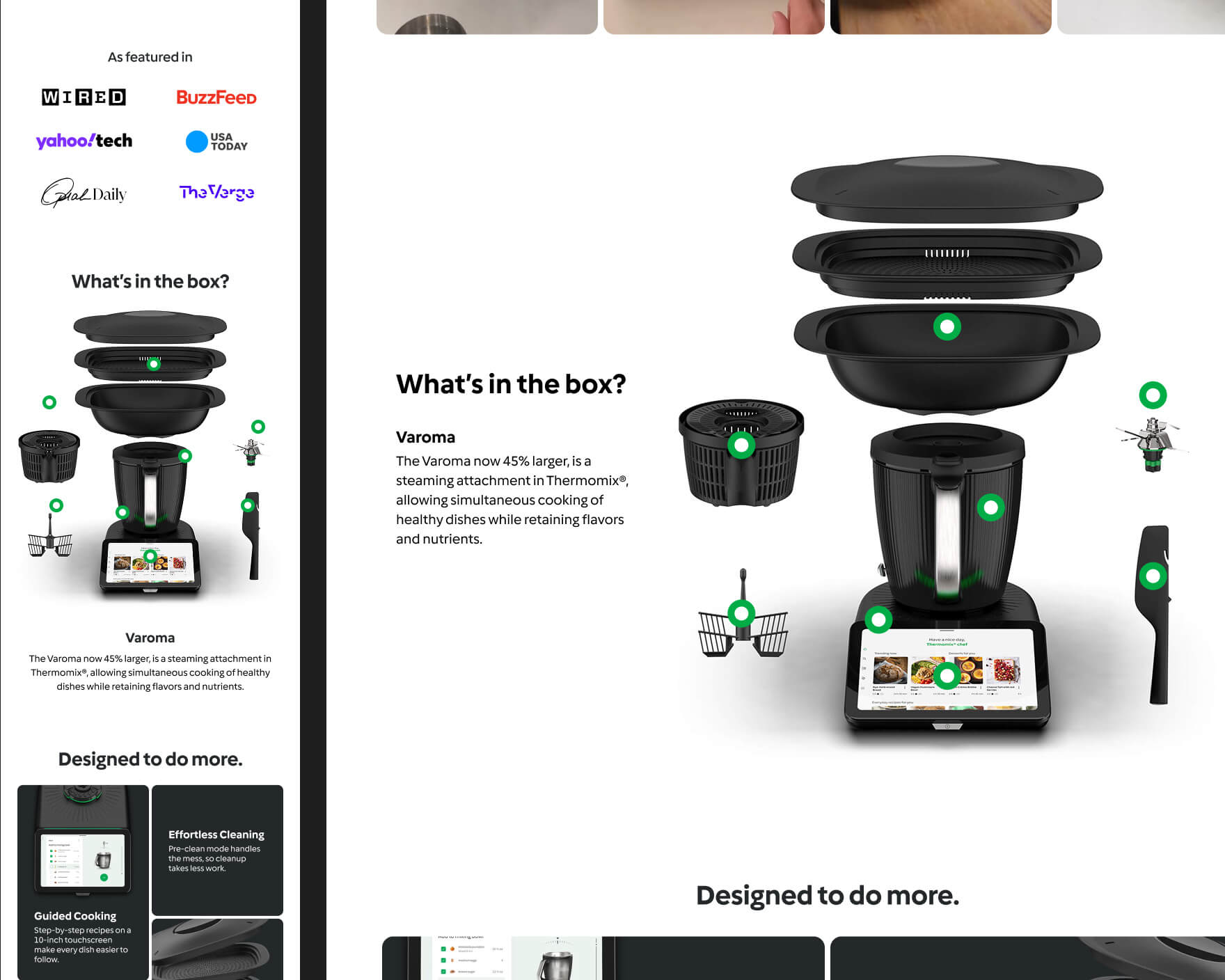
Exploded view with tappable components
Photography showing real use
The gallery had to answer “what does this look like in a kitchen like mine?” not “what does this look like in a studio?”
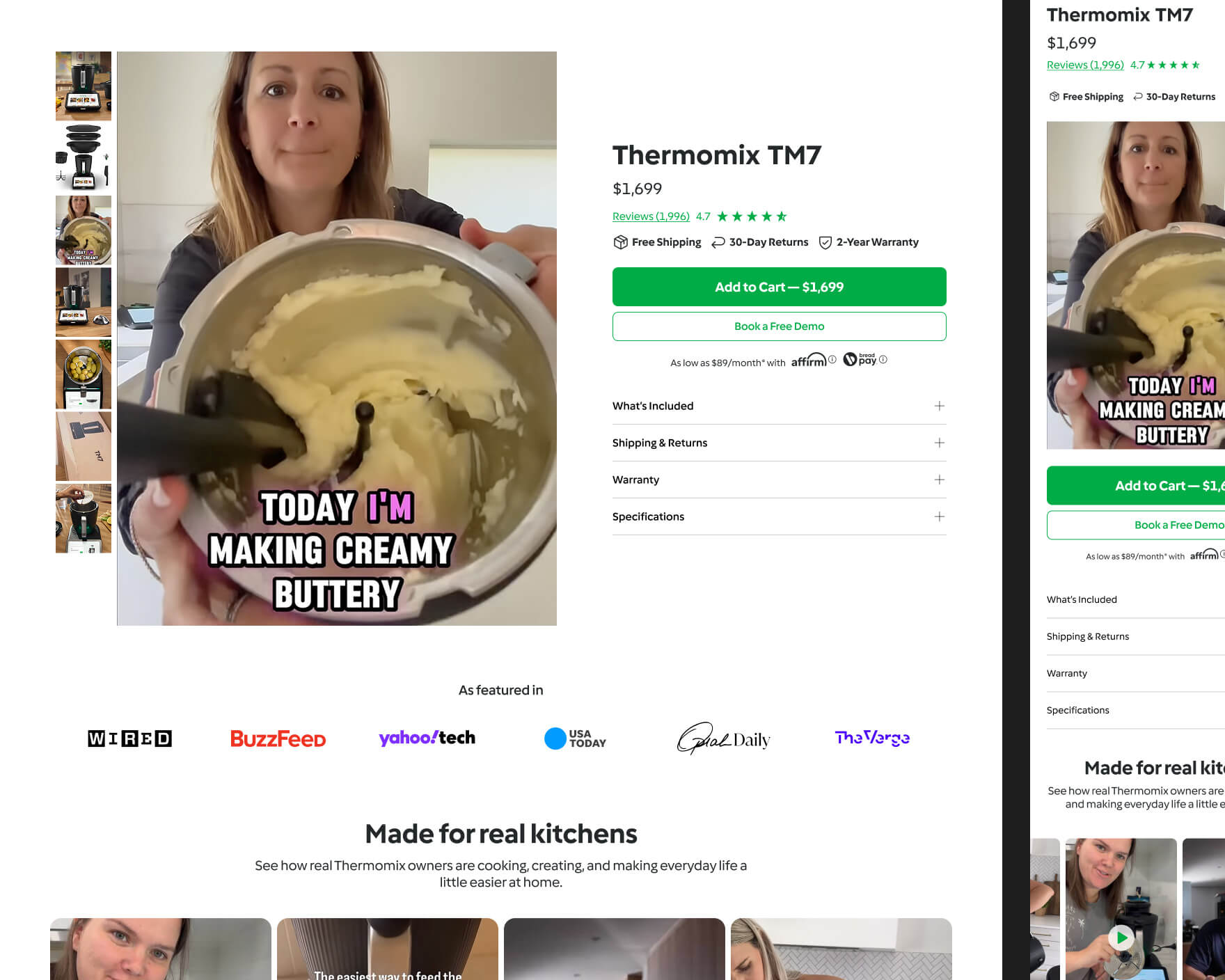
What it looks like in a kitchen like mine
Then it was undone…
Conversion fell to 10%. Traffic was up. CTR was up. The only thing that had changed was the PDP.
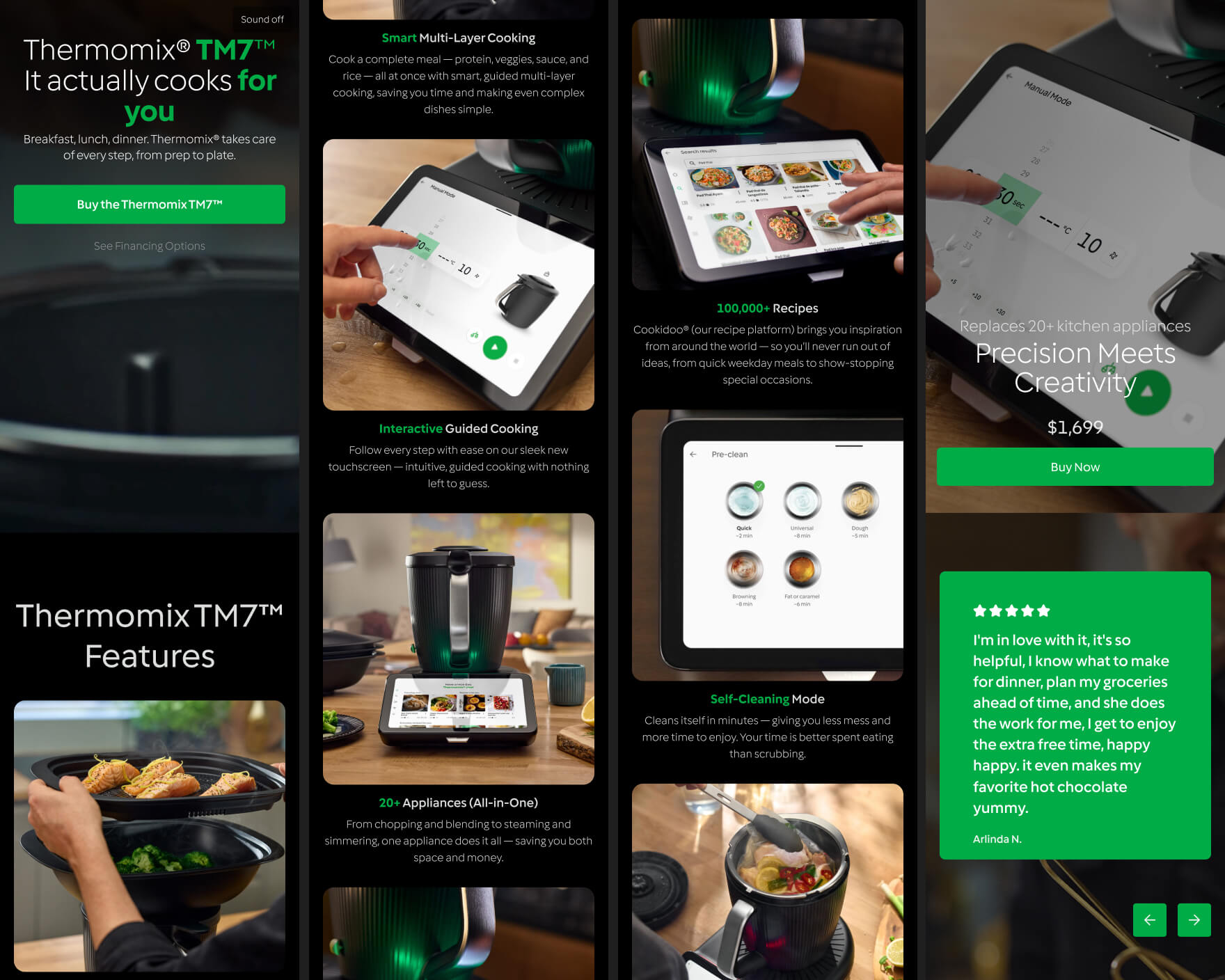
The PDP design that dropped conversions back to 5%
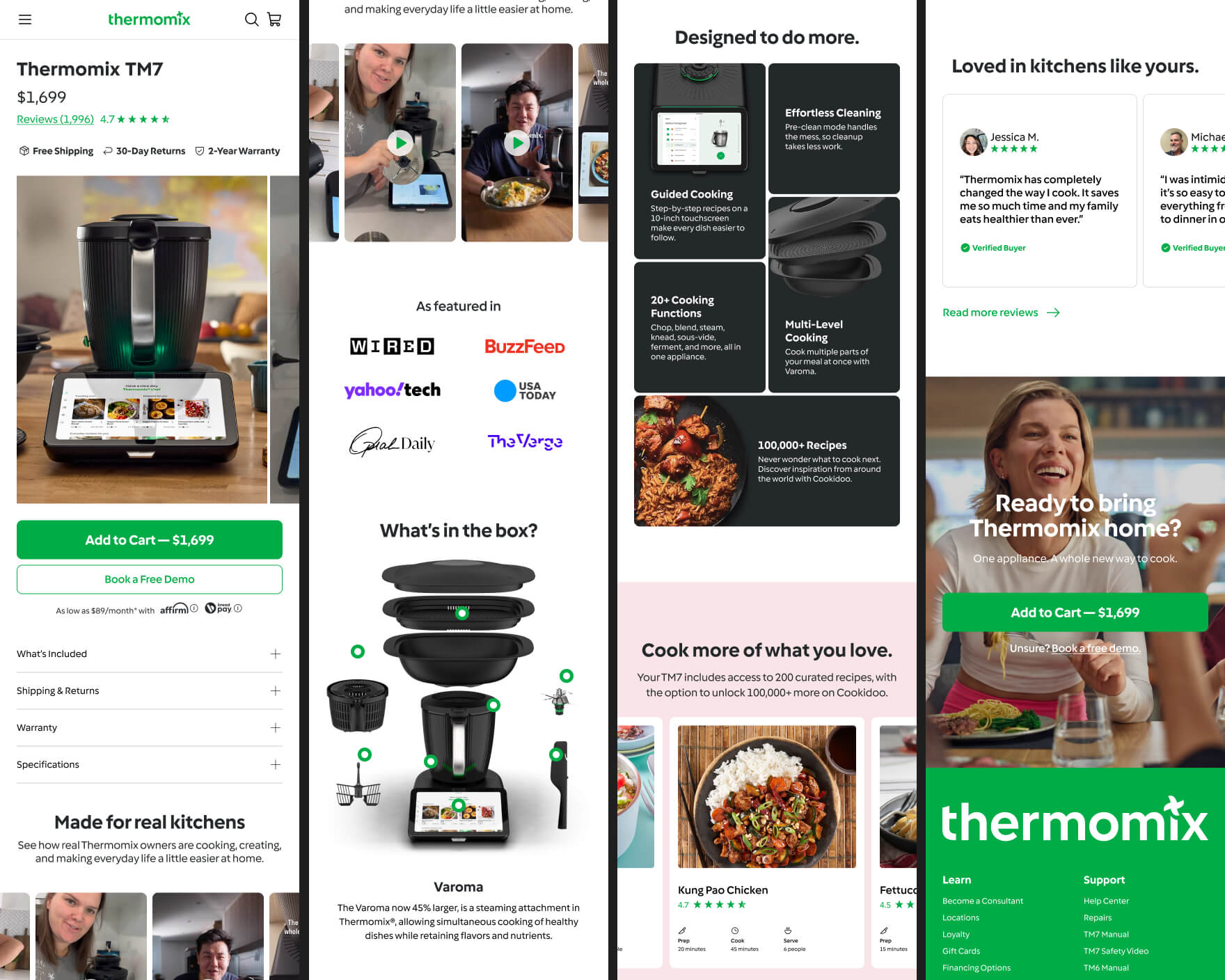
The restored design that got close to 30% conversion
Two things broke
The argument lost its ending
The ads and landing pages had spent months building toward a page that would close. The new page did not continue that conversation, it interrupted it. A visitor arriving cold had no story to attach the price to.
Standard patterns exist for a reason
A customer at the bottom of the funnel arrives with expectations about what a product page contains and where things live. Removing that structure does not reduce friction, it removes the scaffolding people use to decide. The reference brand could ship a minimal page because a century of brand equity does the persuading before anyone lands. This brand does not have that. It has to earn the sale on the page.
Making the case
I raised it with the funnel data: traffic up, CTR up, conversion down 60%, one variable changed. It took over a month to reverse. Real money had been spent on the redesign and it was easier to look for another explanation. That is a normal organizational dynamic, and worth naming honestly rather than pretending good analysis wins immediately. The page was reverted. Performance recovered.
10% to 25% conversion four months after I joined, trending toward 30%. The reason it worked was not any single module. It was that the ads, the landing pages, and the PDP were finally making the same argument in the same voice.
What I had to work with
No brand recognition
In the US this was a name most people had never heard of, selling an unfamiliar category at a price that needed justifying. Every visitor arrived cold.
No direct user research
I did not have access to moderated testing or user interviews. What I had was funnel data, session behavior, conversion by traffic source, and creative performance by narrative. Not ideal, but enough to see where people were dropping and why.
An existing Shopify build
No backend overhaul was on the table. Everything had to work within the platform and the theme structure already in place.
A decision I did not own
The later PDP redesign was commissioned above me. I could make the case with evidence, but I could not stop it.
What I would do differently
I would have documented the reasoning behind the PDP structure while it was working, not after it broke. When the redesign was proposed, the argument for the existing page lived in my head and in performance data nobody had been reading closely. A short written rationale, shared early, would have made the case before the money was spent instead of a month after. I would also have pushed for a staged rollout. A percentage test rather than a full traffic cutover would have surfaced the conversion drop in days rather than weeks, and would have made the revert an obvious call rather than an argument.
What I learned
UP NEXT

